

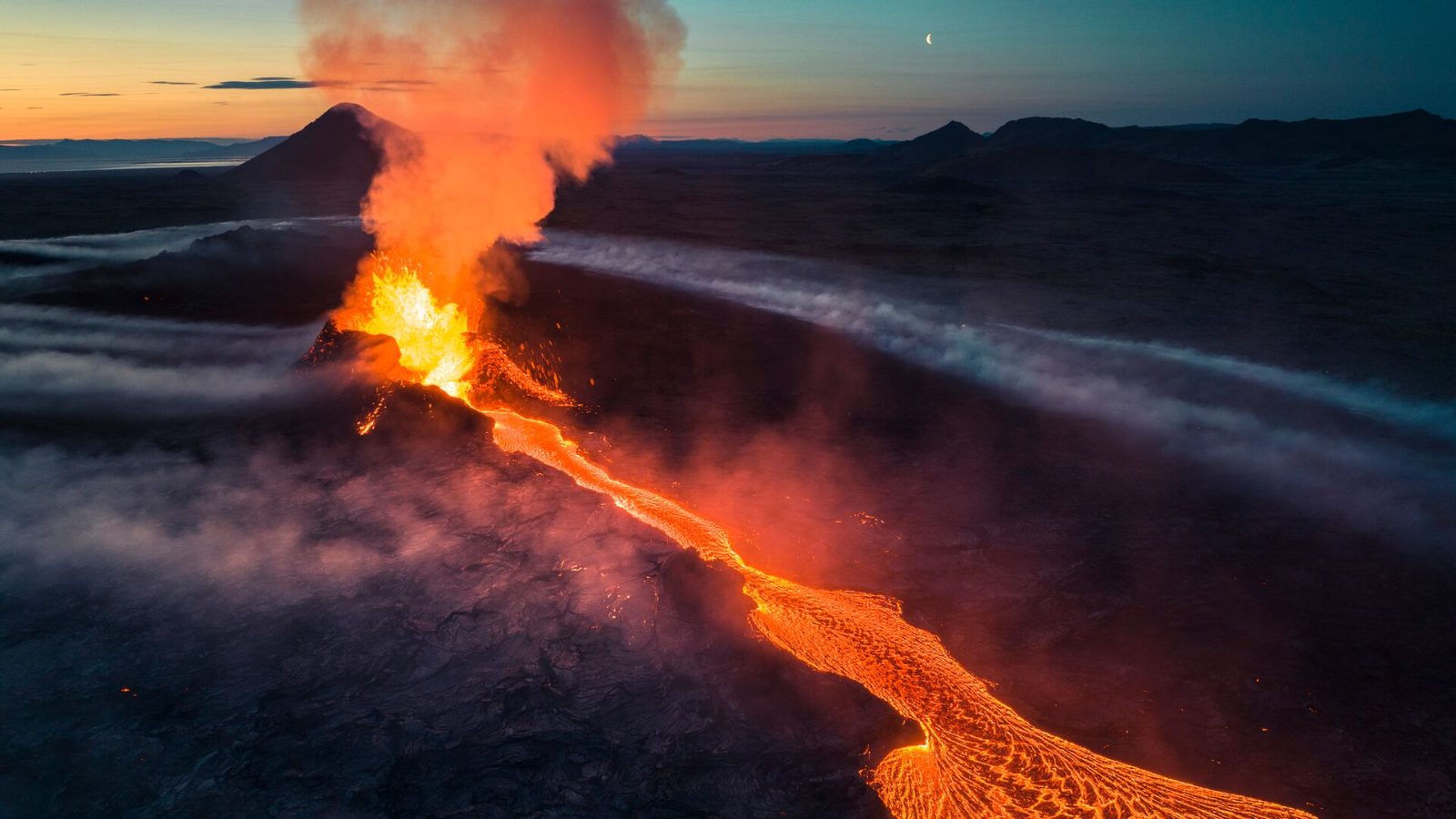
Quick answer
An Iceland volcano trip to Fagradalsfjall requires a 1,000 ISK parking fee at designated eruption site lots near Grindavík, and the area remains open 24 hours daily. Early morning arrivals between midnight and 8:00 AM offer better parking availability and softer light for the hike across volcanic terrain. The trails traverse solidified lava flows, so sturdy footwear and weather-appropriate layers are non-negotiable regardless of season.
The lava fields at Fagradalsfjall cooled into a frozen cascade of black basalt, and the parking infrastructure built during the eruption years now serves as the trailhead for thousands of monthly visitors. Unlike Iceland's older volcanic sites scattered across remote highlands, this eruption zone sits 40 kilometers from Reykjavík and connects directly to Route 427 via Suðurstrandarvegur. Volcanic activity ceased in 2023, but the terrain remains raw. The hardened lava retains sharp, brittle edges that shred soft-soled shoes within hours, and the surface temperature can still radiate residual heat in pockets where vents once flowed. Weather shifts rapidly—coastal fog rolls in without warning, and wind speeds double on exposed ridges. Visitors who arrive unprepared often turn back within the first kilometer, frustrated by inadequate gear or underestimated distances. The hike itself covers roughly three to five kilometers depending on which vantage points you target, with elevation gains that feel modest until compounded by uneven footing. The trails follow marked paths established by rescue teams during the active phase, but erosion and shifting gravel mean route conditions change seasonally. Spring and autumn bring mud that conceals ankle-twisting crevices, while winter ice transforms gentle slopes into technical traverses. Summer offers the longest daylight window, though midday crowds fill the parking area by 10:00 AM. Most visitors allocate three to four hours for a round trip that includes time at overlook points, but turnaround decisions depend on stamina and weather rather than fixed itineraries. Mobile signal coverage exists near the trailhead but fades quickly once you cross the first ridge, so offline maps and downloaded safety information become necessary rather than precautionary. The site operates without staffed facilities—no restrooms, no water stations, no shelter—so self-sufficiency defines the experience. Planning an Iceland volcano trip here means treating the environment as backcountry terrain despite its proximity to paved roads and its popularity on travel itineraries.
“The lava fields at Fagradalsfjall cooled into a frozen cascade of black basalt, and the parking infrastructure built during the eruption years now serves as the trailhead for thousands of monthly visitors.”
Optimal Timing for Your Iceland Volcano Trip
The best arrival window is 00:00–08:00, which offers higher parking availability and calmer light for hiking. Planning your visit during these early hours helps manage the fluctuations in weather conditions common on the Reykjanes Peninsula.
Summer (June-August)
High; plan for peak demandMild temperatures, 8–15°C; frequent fog.
Long daylight hours allow for flexible timing. Early arrivals are essential to avoid midday crowds.
Winter (November-March)
Low; trails may be icyCold, -5 to 5°C; high wind risk.
Short daylight hours limit hiking time. Check weather forecasts frequently before departure.
Weekday mornings
Low; ideal for solitude—
This window provides the most consistent hiking environment. Calmer winds and better light simplify navigation during the ascent.
Verdict: For the best conditions, aim for an early morning arrival between 00:00–08:00 on a weekday during the shoulder months of May or September.
Navigating to Your Iceland Volcano Trip Site
The volcanic site is located on the Reykjanes Peninsula, accessible via Suðurstrandarvegur. Private transport or guided tour transfers are the primary methods for reaching the designated trailhead parking area.
Drive to Suðurstrandarvegur, 240 Grindavík
Guided tour transfer from Reykjavík
From the designated parking area to the trail head
Step-by-Step Guide for an Iceland Volcano Trip
Visiting Fagradalsfjall Volcano requires checking safety conditions, navigating trail access points, and preparing for a multi-hour hike across lava fields. The complete journey from arrival to viewing the volcanic features typically takes 4-6 hours.
Check eruption status and alerts
Visit https://www.visitreykjanes.is before departure to confirm current volcanic activity and any trail closures. Many visitors arrive expecting visible lava flows only to find the eruption cycle has paused.
Arrive at designated parking area
Park at one of the marked lots along Suðurstrandarvegur—a 1,000 ISK fee applies. Spaces fill quickly after 08:00, especially on weekends.
Register with on-site safety personnel
Sign in at the trailhead station where staff log hiker numbers and provide current route conditions. This step is mandatory and ensures search teams have accurate records if weather deteriorates.
Follow marked trail to viewing areas
Stay on the designated path marked by orange poles—shortcuts across fresh lava fields risk ankle injuries from unstable crust. The primary viewing area sits approximately 3-4 km from the trailhead.
Respect safety perimeter boundaries
Barriers mark zones where ground temperatures or gas concentrations exceed safe levels. Visitors who cross these lines face fines and endanger rescue personnel.
Iceland Volcano Trip Preparation Checklist
Volcanic terrain demands specific gear and preparation beyond typical Icelandic hiking.
-
Wear sturdy hiking boots with ankle support — Lava fields are uneven and sharp, risking twisted ankles on loose rock.
-
Bring a headlamp with spare batteries — Early morning or winter hikes require hands-free lighting on dark trails.
-
Download offline maps before departure — Mobile signal is unreliable near Grindavík and the eruption site.
-
Pack windproof and waterproof layers — Weather shifts rapidly, and exposed ridges offer no shelter from coastal storms.
-
Carry 2+ liters of water per person — No facilities exist on-site, and volcanic heat increases dehydration risk.
-
Bring a gas mask or respirator — Sulfur dioxide concentrations spike unpredictably downwind from active vents.
-
Check eruption status on SafeTravel.is — Activity levels change daily, affecting trail accessibility and safety zones.
Sights Near Your Iceland Volcano Trip
The Reykjanes Peninsula offers geothermal and coastal landmarks that complement the volcanic landscape. These sites provide context for the region's active geology after your hike.
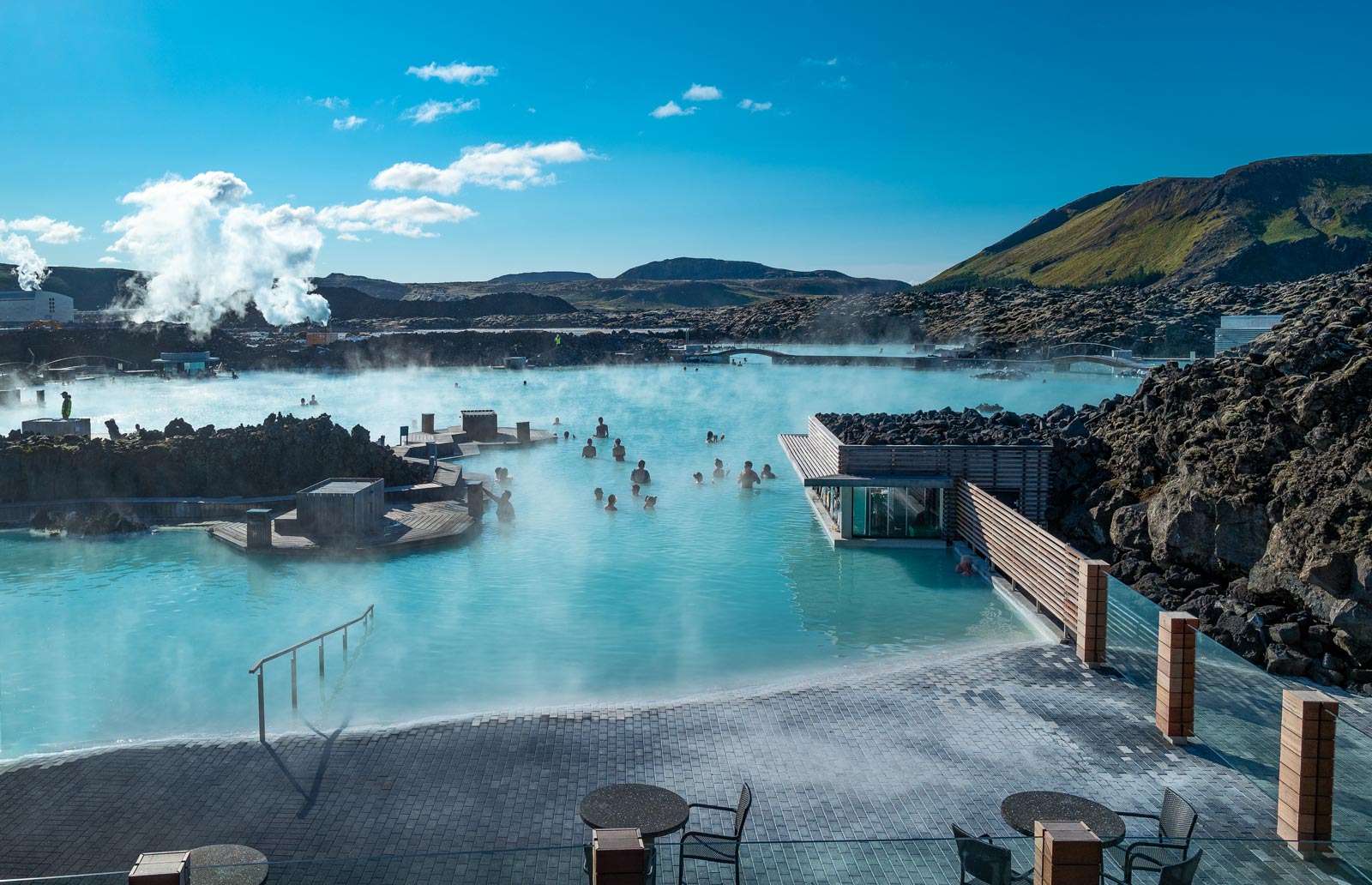
Blue Lagoon
This geothermal spa allows for muscle recovery in mineral-rich waters following a lengthy hike across rugged lava fields.
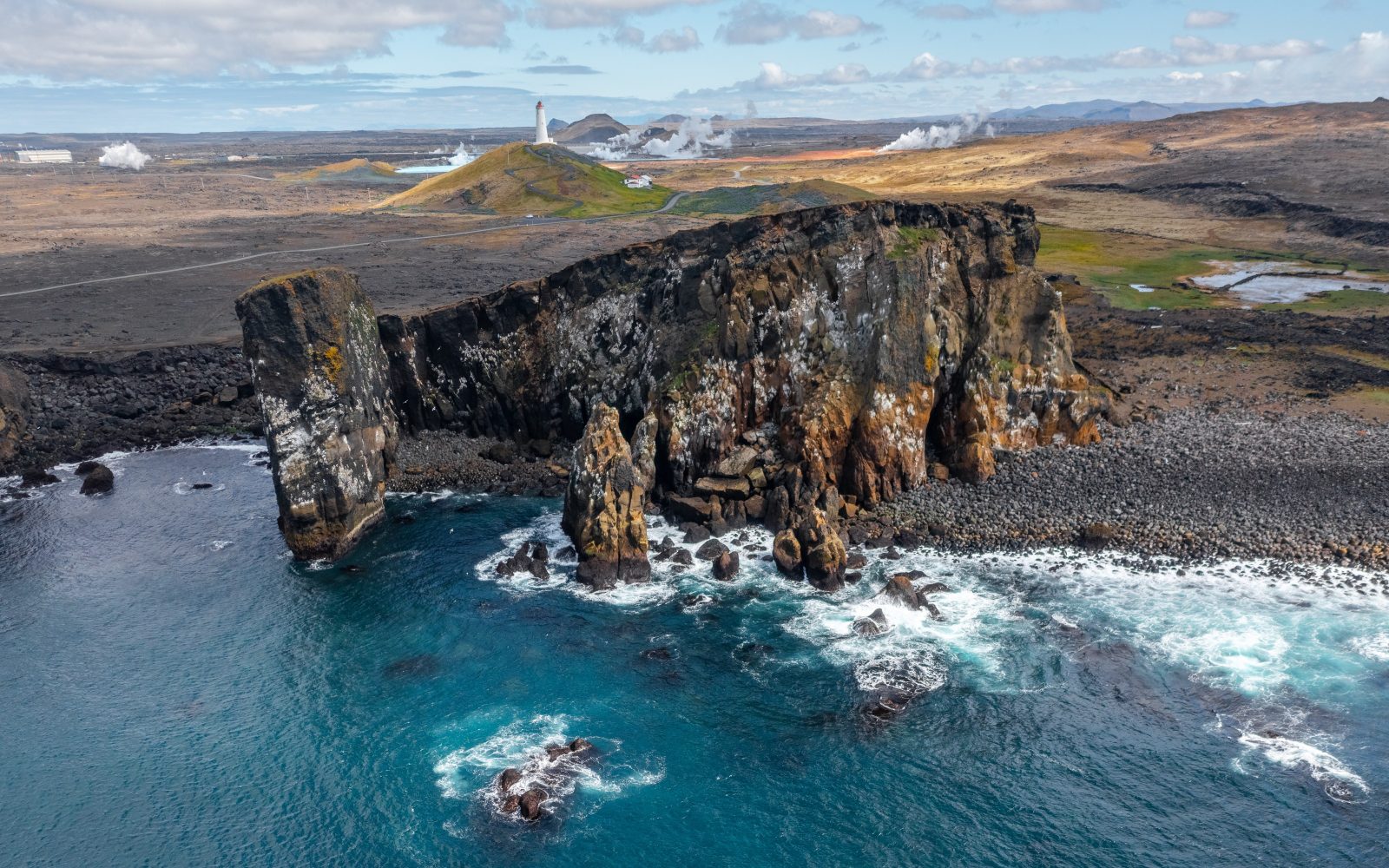
Reykjanesviti Lighthouse
As Iceland's oldest lighthouse, this site offers views of the rugged coastline and the Reykjanes ridge tectonic boundaries.
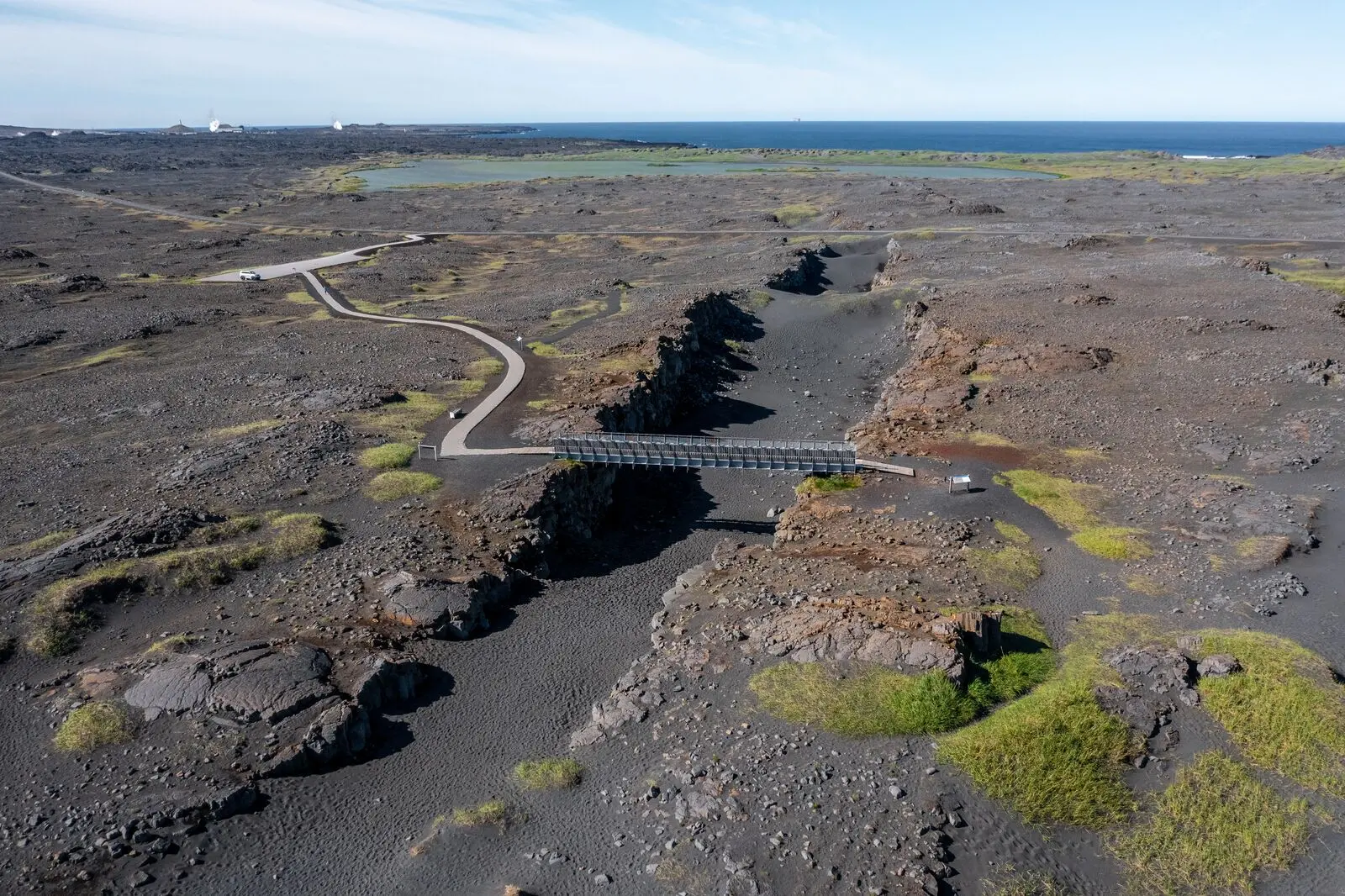
Bridge Between Continents
This pedestrian bridge spans a major fissure, providing a tangible connection to the divergent tectonic plates that cause volcanic activity in the region.
Check availability
Frequently Asked Questions About Your Iceland Volcano Trip
Everything you need to know about iceland volcano trip